What are Giclée fine art prints?
Why do it?
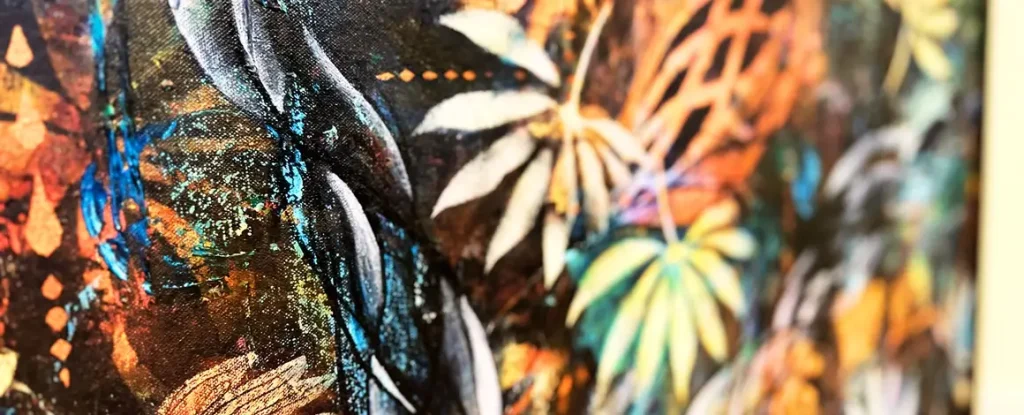
As we are all well aware, when an artist paints a work of art there is ONLY ONE original. It has a high value and represents the time and energy of the creative process. Only one exists and so it must command a price indicative of it’s originality.
With today’s technology, the tirelessness and dedication of artists can reach many more people. Artists can offer reproduction prints of their original art, enabling their work to be appreciated much more widely than ever before. And they can control the quality and price point of what they are able to offer, and can do so in a selective production model, meaning less strain on resources as production is intentional.
Diminishing waste and unsold stock is inherently more earth-conscious, and so too is supporting humanity through greater access to the positivity and healthful benefits of living with art. By choosing to purchase directly, customers are also making mindful positive economic choices by supporting independent makers that are doing the same.
The opportunity for “non-creatives” to discover ways that support their own expression, their sense of style, discernment, and sensibilities leading to raised self-awareness and sharing greater connection with their inner circle of humans is powerful.
What does giclée (pronounced “zhee-clay”) even mean?
In essence, a Giclée Print is simply an archival fine art reproduction of artwork outputted from a computer to a large format inkjet printer. Archival is a term used to describe something that is resistant to deterioration with excellent longevity. In contrast to traditional printmaking techniques such as lithography and screen printing which are artforms in themselves, Giclee printing denotes a high standard of quality of ink jet printing that is used to reproduce many different mediums of art.
What goes into the making of Giclée fine art prints?
High resolution image file
Firstly, a high quality digital file of the artwork is required, either photographed or scanned for accurate reproduction of details, colours, and textures.
Specialised printer with pigment inks
Typically, to achieve truest colour reproduction specialised printers are able to hold up to twelve colour pigment inks, far more than the 4-colour profile of standard inkjets. A giclee print made using pigment inks can be lightfast for up to 100+ years, but this depends on factors such as paper type and storage conditions.
Archival Paper
For optimal results with giclee printing, using either archival or museum grade category inkjet paper is recommended. Generally these will be in categories of matte, cotton-rag or canvas. Unlike the wood pulp most papers are made from, cotton rag paper makes a fantastic printing stock for fine art.
Caring for your Giclee Art Print
Longevity & storage
The conditions in which prints find themselves vastly impact their longevity. Of most importance to note- fading from exposure to daylight (ultraviolet light), and acidity.
Any pigment or dye, whether it be in an original painting, fine art print, photo print, paint, fabric etc. will fade more quickly if exposed to direct UV radiation i.e. sunlight.
Starting with high quality acid-free paper is essential, along with ph neutral fade-resistant pigment inks is the best start. If paper is stored rolled for an extended period, the paper may need time to relax prior to mounting into a frame. Ideally, consult your custom framer as they are experienced in handling art and can minimise potential damage that can inadvertently occur.
Frame for protection and to elevate the artwork
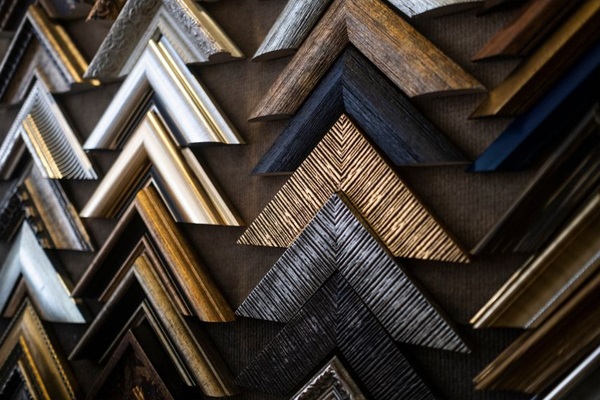
To remain truly archival, a giclee print (as for an original piece) would optimally be framed. Framing will protect the print from air, and additionally, some conservation glass options can further reduce UV light exposure. Another important point to note is avoiding prolonged contact with the print surface (including glass) which is achieved most often via mounting with an acid-free mounting matboard, leaving a little space for condensation to sit safely away from your print. This also allows for normal paper expansion and contraction, where the print is hang-mounted as a custom framer would do.
Choosing a place to hang
In indoor environments, framed pieces can be further protected by considering “extreme” fluctuations indoors. This looks like being hung away from air-conditioning/ heating vents, on an interior wall vs an external wall (that potentially will heat & cool according to external conditions), and not in proximity to typical humid spaces such as bathrooms or enclosed cooking spaces.